


 November 20, 2026
We are in the season of change! As the leaves turn and nature prepares us for a new season, we are reminded that growth is a continuous process.
And childhood is no different! The first few years of life are a particularly important period of growth and development. During this time, the brain is highly adaptable, forming and strengthening connections through everyday experiences and relationships. These early experiences help shape how children communicate, move, build relationships, and interact with the world around them; laying the foundation for future learning and development.

One of the most fascinating parts of early childhood development is something called neuroplasticity; the brain’s ability to adapt, reorganize, and strengthen connections in response to experiences and practice.
A child’s brain is developing rapidly during early childhood. Neural connections are continually forming and strengthening.
Research highlights why early intervention matters. Nelson et al. (2024), in the Journal of Child Psychology and Psychiatry, explain that “neuroplasticity is at the heart of early intervention.” During early childhood, the brain is especially receptive to experiences that support learning and development.
So Why Is This Important?
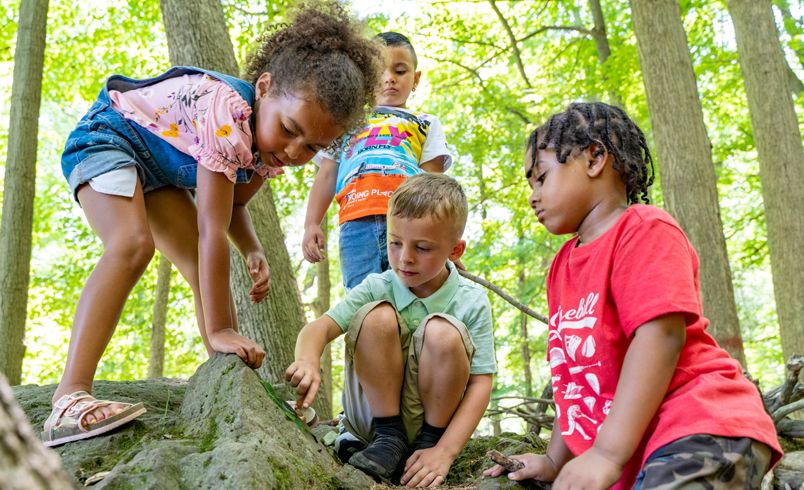
The experiences children have, the opportunities they are given, and the skills they practice every day all contribute to their overall development (even in adulthood). The skills we build today become the foundations of tomorrow!
Think of early development like the changing seasons. Just as trees rely on strong roots to support future growth, children build foundational skills that support more complex learning as they get older. For example, early communication skills help children eventually express their thoughts, needs, and feelings. Developing balance, coordination, and body awareness supports future movement and independence. Early opportunities to problem-solve, take turns, and manage emotions help lay the groundwork for social relationships, learning, and self-regulation.
These skills don’t develop in isolation; they build upon one another over time. Research shows that the brain develops from the bottom up, with simpler neural connections supporting the development of more complex skills.
The beautiful thing about neuroplasticity is that learning happens through everyday experiences, not just structured activities or therapy sessions!
How can you put all of this into practice?
Start small! You don’t need to create new activities or add more to your already busy schedule. Instead, look for opportunities within routines you already share. Encourage your child to help get dressed, practice similar words during mealtime, take turns during play, or explore different movements at the park. Follow your child’s interests, allow time for them to try things independently, and celebrate their efforts along the way.
If your child receives OT, PT, ST, or EIS, ask your therapist how you can carry over new skills at home. Remember, growth doesn’t happen all at once. It happens through small, meaningful experiences repeated over time. Just as each season contributes to the growth of a tree, every opportunity to connect, explore, and learn helps build the foundation for your child’s next stage of development.


Further Reading:
Nelson, C. A., Sullivan, E., & Engelstad, A. M. (2024). Annual research review: Early intervention viewed through the lens of developmental neuroscience. Journal of Child Psychology and Psychiatry
Izadi-Najafabadi, S., Rinat, S., & Zwicker, J. G. (2019). Rehabilitation-induced brain changes detected through magnetic resonance imaging in children with neurodevelopmental disorders: A systematic review. International Journal of Developmental Neuroscience
